Skip to content

Motors for food machinery · Taichung, Taiwan · Since 1990

We have made motors for food machinery for 36 years.

Meat grinders, mixers, bone saws and vegetable cutters. These four machines are what we know. We design the motor, wind it and assemble it in our own factory, so it can be made to fit your machine. And when there is a problem, you can reach us.

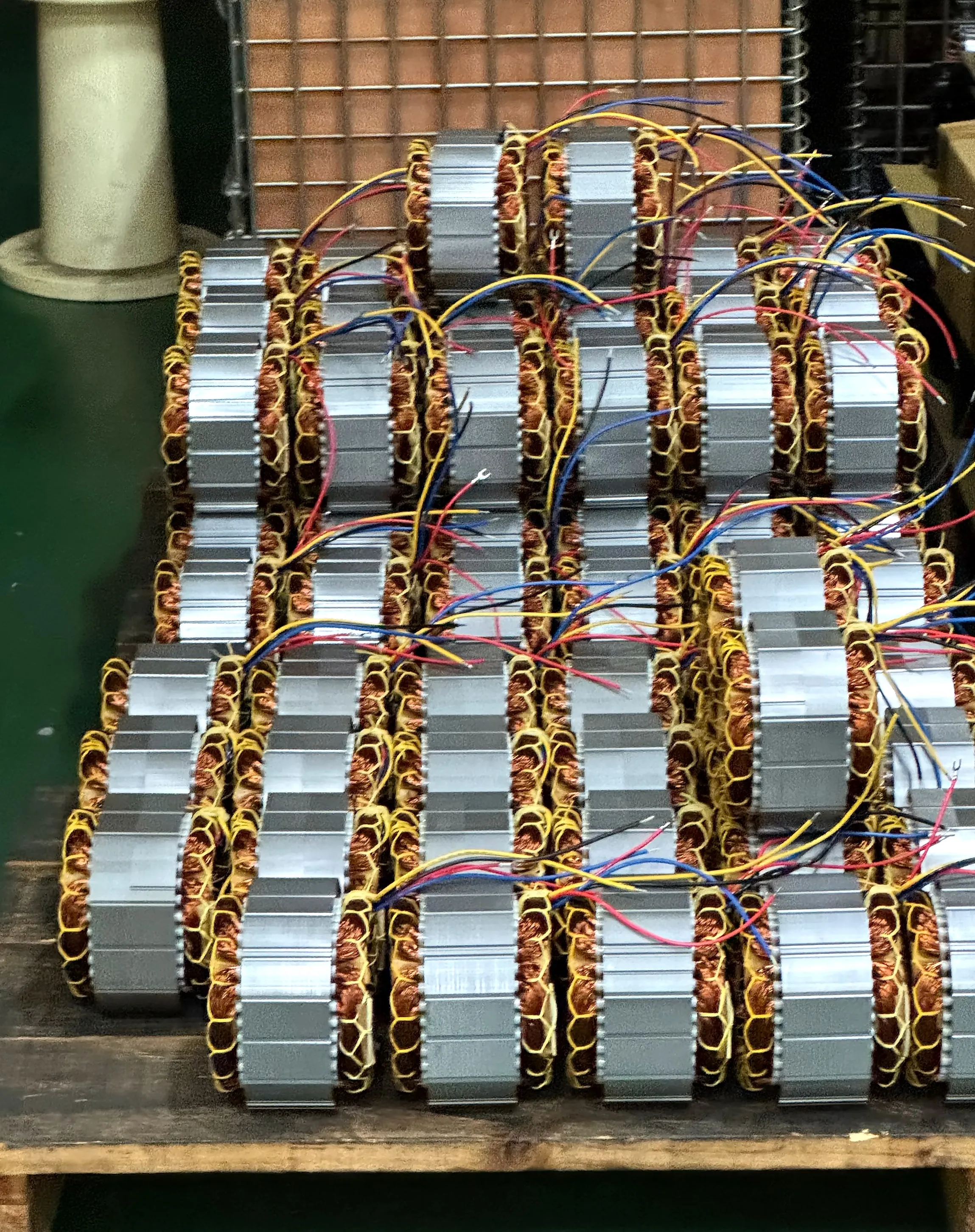
A pallet stacked with wound stators, the copper windings and steel laminations clearly visible
1990
Founded
0.4–7.5
Power range (kW)
IE3
Standard efficiency class
CE · UL
Approval support

Which machines do you supply?

We build motors for four kinds of machine

Food machinery works differently from ordinary industrial equipment. A meat grinder gets stuck on frozen meat. A bone saw takes a knock every time the blade meets bone. A mixer turns slowly for hours. The same power rating needs a different winding in each case.

Meat grinders

Frozen meat and gristle need a lot of starting force, and the motor often gets stuck. We design the winding and the cooling for a motor that gets stuck, not for one that runs steadily all day.

Why can a grinder motor not be chosen on horsepower alone?

The difficulty with a grinder is not continuous output, it is stalling. Two motors both marked 3 HP can behave very differently when frozen meat jams the auger: the starting torque and the temperature margin are not the same. What matters is what happens when it gets stuck, not what happens when it runs freely.
Mixers (spiral, planetary, whisk)

Running slowly for a long time makes the motor hot, and heat is what usually fails first. We adjust the winding to suit how long your mixing cycle is. We can also build for two speeds or for use with an inverter.

Why does a mixer motor get hotter the longer it runs?

The cooling fan sits on the motor shaft, so when the speed drops the airflow drops with it, while the heat does not fall by the same amount. A motor for slow, long running cannot be chosen on the ordinary continuous rating. It needs a temperature margin, and sometimes a separate forced-air fan.

Bone saws

Every time the blade meets bone, the motor takes a knock, and that happens many times a day. We choose the rotor and bearings to take repeated knocks, so the shaft does not become loose over the years. Where the saw has to stop quickly as a guard opens, we make that brake ourselves.

The motor has become noisy. Is it failing?

Switch it off and turn the shaft by hand. If it feels rough or gritty, it is usually the bearings. If it turns smoothly and the noise only appears when running, look at the blade and the drive instead. Bearings are a wearing part, and on a machine that takes constant knocks they are replaced more often. Changing them early costs less than letting the shaft wear.

Vegetable cutters

There is usually not much space inside these machines, so fitting matters more than power. We can change the frame size and the position of the terminal box to suit your machine, so changing the motor does not mean redesigning the machine around it.

There is not enough room. Can we fit a smaller motor?

First we need to know whether the frame does not fit or the power is not enough. The same output can be built in a different frame size, but the cooling and the temperature rise have to be worked out again. Tell us the space you have and the real load, and we will look at it.

What do you do yourselves?

We do the design, the winding and the assembly ourselves

How a motor performs depends mostly on the electrical design and the winding, so we keep both in our own factory. Casting and machining are done by suppliers we have worked with for years. We set the specification, we check the parts when they arrive, and the quality is our responsibility.

01

Electrical design

We decide the winding — the number of turns, the wire size, how full the slots are, the number of poles — from how your machine actually runs. We do not simply pick the closest motor from a list. A motor chosen this way is not larger than you need to pay for, and not so small that it burns out.

02

Winding

The stator winding is done in our own factory. When a specification needs to change, we are arranging our own production line, so the timing is easier for us to control.

03

Brakes

Food machinery often has to stop quickly when a guard is opened or a lid is lifted, and machine safety standards look at how long that takes. We make the brakes ourselves, so the braking torque and the stopping time can be matched to your machine instead of bought in and made to fit.

04

Assembly

Motors are assembled here. Common frames and parts are held in stock, which keeps lead times predictable.

05

Testing

Every motor is electrically tested before it leaves. The test equipment is ours, and we can send you the report if you need it.

06

Managing our suppliers

Casting and machining are done outside, to a specification we set and with parts we inspect. For you there is only one company to deal with, so if something goes wrong you do not have to work out which supplier caused it.

Other things we can build

Inverter duty
A lot of our work is three-phase motors built to run on an inverter. An ordinary motor wired to an inverter has its insulation worn down by voltage spikes and does not cool properly at low speed, so we design the insulation and the cooling for it.
Two speed
Dahlander or separate windings, so high and low speed are selected by wiring rather than by adding an inverter.
IE4
IE3 is our standard. IE4 can be looked at for your project.
Brushless (BLDC)
We have produced these. Worth discussing if the machine needs a wide speed range or has an efficiency target.

Inside the factory

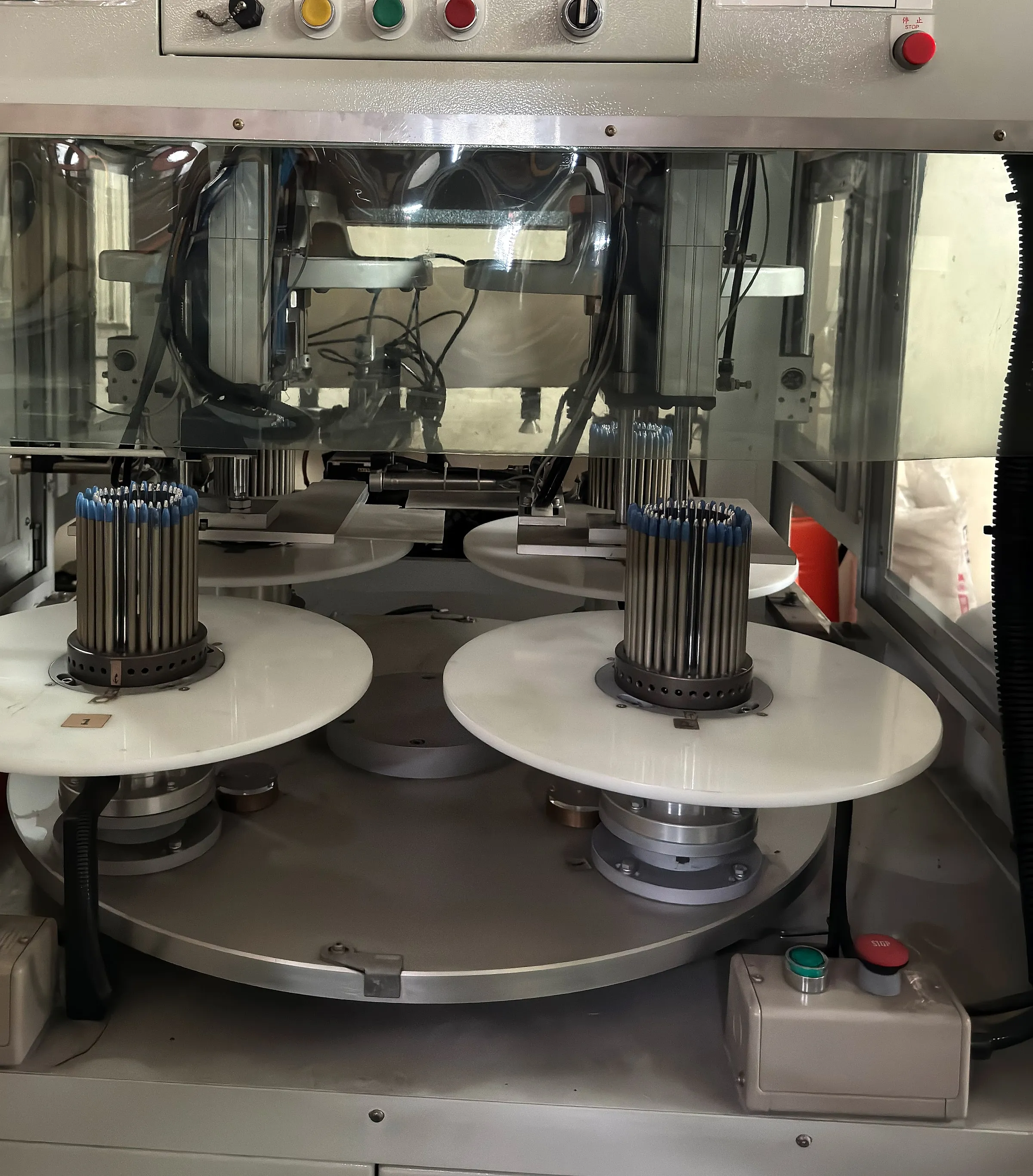
Two stations of an automatic stator winding machine, each holding a winding former
Automatic winding machine. Stator winding is done on our own floor.
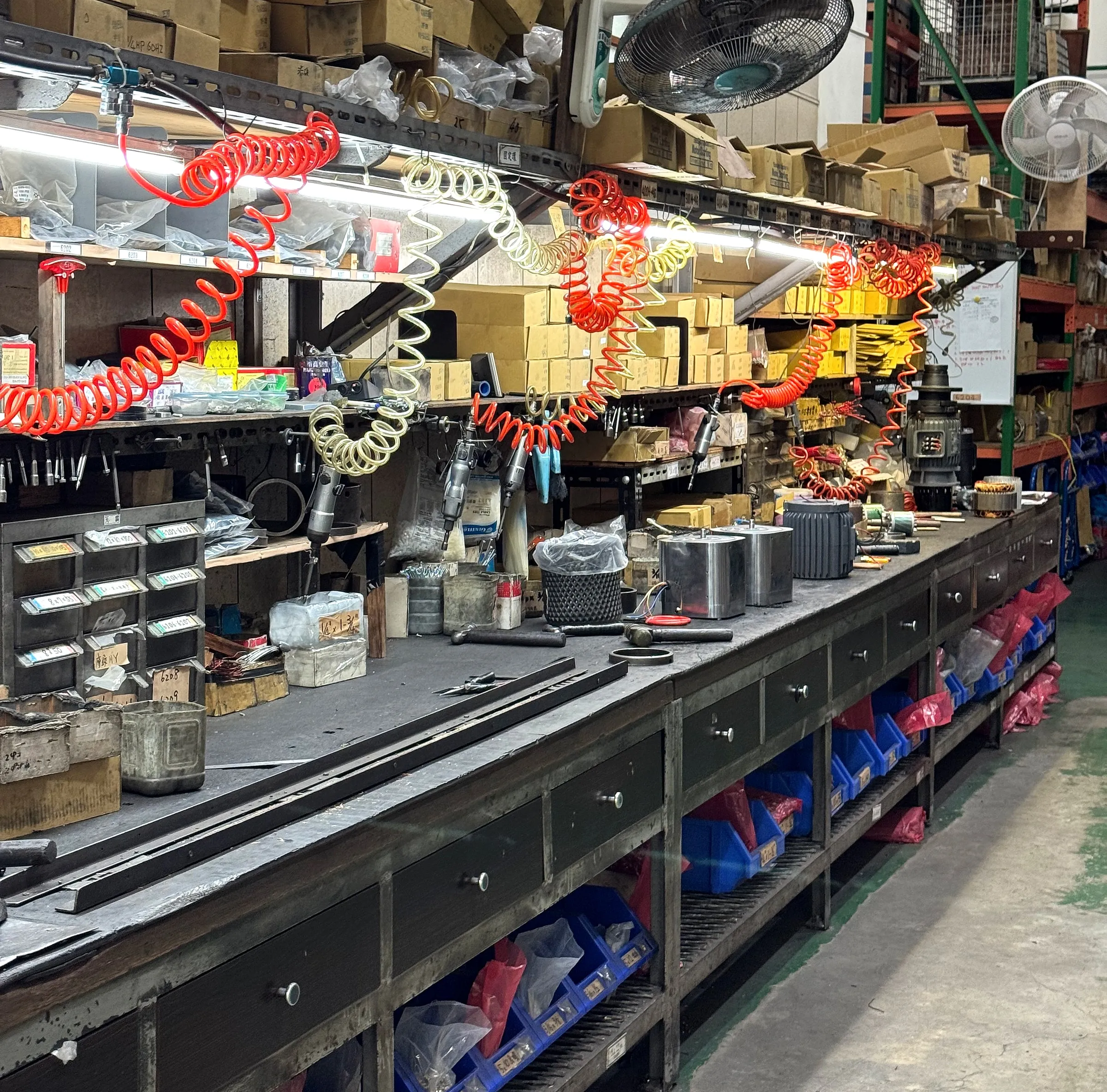
The assembly bench, with air tool lines overhead and motor parts laid out on the top
Assembly bench. Every motor is electrically tested here before it ships.
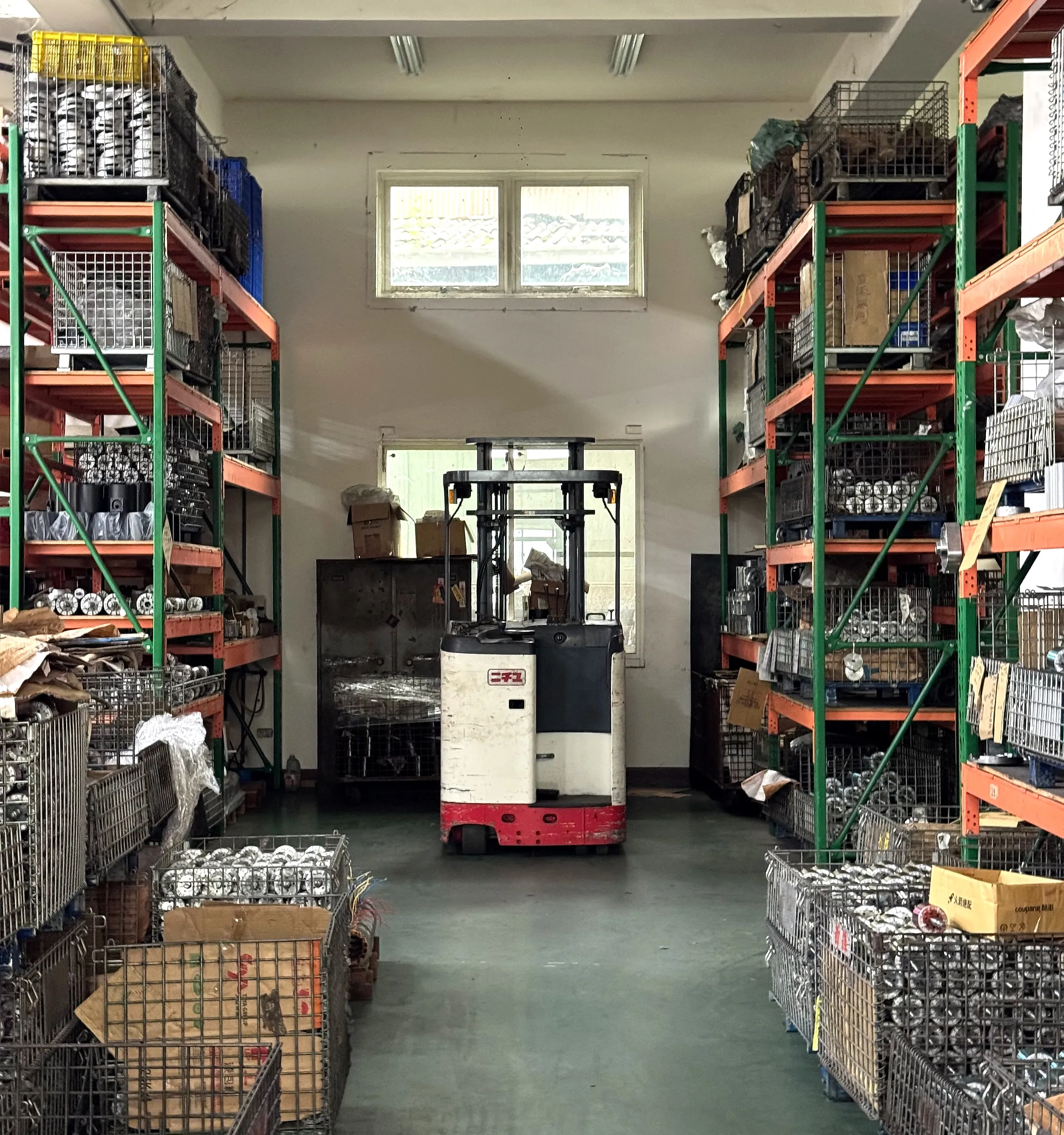
Warehouse racking holding motor components, with a reach truck at the end of the aisle
Parts store. Common frames and components are held in stock, which keeps lead times predictable.

How do we start?

From your machine to your production line

You do not need to decide the motor specification before you contact us. Just tell us about the machine. Choosing the motor is our job.

  1. 1

    Tell us about the machine

    What the machine does, how it runs, how much space there is for the motor, which motor you use now, and what you are not happy with. The more we know, the better our choice will be.

  2. 2

    We suggest a specification and a price

    We send you a suggested specification and winding, with a price for your quantity.

  3. 3

    Samples

    We build samples, test them, and send them to you to fit and try on the machine.

  4. 4

    We adjust it

    You run the samples. We adjust the winding or the cooling based on what actually happens, until it works the way you need.

  5. 5

    Production

    Once the specification is settled we schedule production. For repeat orders we can work to your own build schedule.

What if we need approval?

If your machine needs approval, we go through it with you

Most customers do not need it, and we will not push it on you. But if your machine is going to Europe or North America, the motor is often the part that holds up the approval of the whole machine. On those projects we choose the materials against the standard from the design stage, build a motor that will pass, go through the process with you, and then produce to that same specification.

01

Built to the standard from the start

Insulation class, wire, creepage distance, thermal protection — these have to be chosen against the target standard while the motor is being designed. Adding approval afterwards often means redesigning the motor and testing it again, which costs both money and weeks.

02

We go through the process with you

We do not hand you a document and leave you to it. Which samples to prepare, what the laboratory will ask, and what to change if it comes back — we deal with that together.

03

What was approved is what we build

The motor that passed and the motors we produce afterwards share the same design and the same bill of materials. Good parts for the test sample and cheaper parts for production is not something we do.

What we have taken through approval

CE

For the European market

UL / cUL

For the North American market

Efficiency testing

Motor energy efficiency class verification

Efficiency class

Our motors are built to IE3 as standard. We have also produced IE4 motors and permanent-magnet brushless (BLDC) motors, which we can look at for your project.

We can send the test data with the motors. When you apply for machine approval, or when your own customer audits you, you can use our figures instead of measuring again. If your market needs another certification, please ask us.

What we test before shipping

  • Hi-pot (dielectric strength) test
  • Insulation resistance
  • No-load current and speed
  • Locked-rotor current

Questions

What people usually ask

Can you copy the motor we buy now?

Yes. This is the most common thing we do. Send us a sample or a drawing with the sizes, and tell us the performance you need. We will make the mounting the same, so it fits straight into your machine and nothing else has to change.

We are not sure what size of motor we need. Can we still ask?

Yes, and that is our job rather than yours. Just tell us how the machine runs, which motor you use now, and what you are not happy with. We will choose it for you.

Can you put our own brand on it?

Yes. The nameplate, the paint colour and the packaging can all follow what you need.

If casting and machining are done outside, how do you control quality?

We set the specification, we inspect the parts when they arrive, and the responsibility stays with us. You deal with one company. A problem will not be passed back to a supplier.

Do you make brushless (BLDC) motors?

We have. Induction motors are our main line, but we have also produced permanent-magnet brushless motors and IE4 motors. If your machine needs a wide speed range, or has an efficiency target to meet, tell us what you need and we will advise which type suits it better.

What is the minimum order, the lead time and the payment term?

These depend on the machine and the quantity, so there is no single answer. Please email or call us with the details and we can give you exact numbers.

Contact us

Tell us about your machine

You do not need to prepare a specification first. Tell us what the machine is and what is going wrong, and our reply will include a suggested specification.

Or contact us directly

Factory
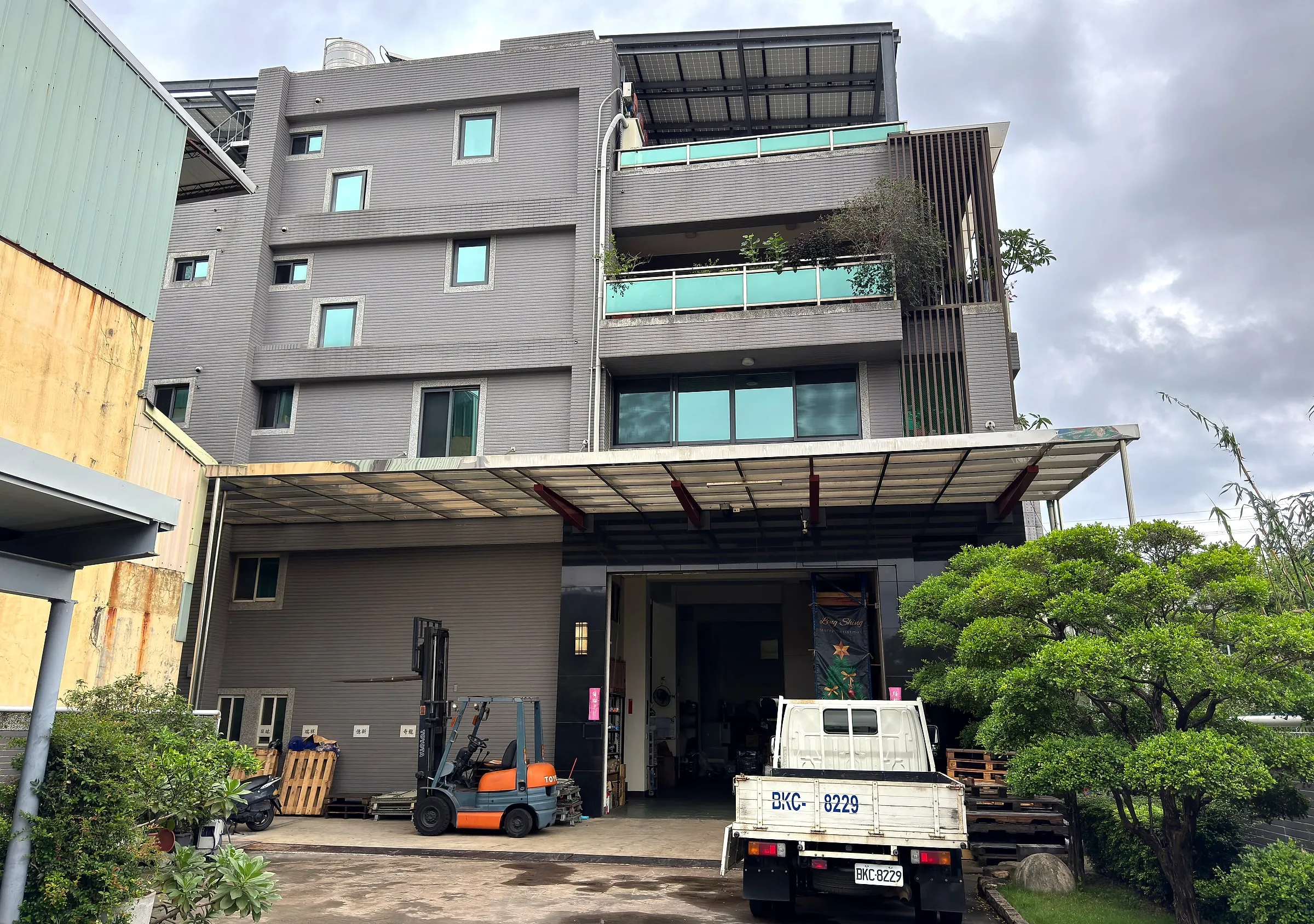
No. 276-2, Sec. 1, Nanjing E. Rd., East Dist., Taichung City 401, Taiwan
The Longshing Electric Machinery factory in East District, Taichung
Nanjing E. Road, East District, Taichung. Visitors are welcome by appointment.

We do not share your details. If you are not sure about the specification, just describe the machine.